
Obstacle Course Rentals for Kids, Teens, and School Events
Planning a party or school event where kids actually want to participate—not scroll their phones? Inflatable obstacle courses turn passive attendees into active competitors, channeling energy into timed challenges, friendly races, and physical play that keeps everyone engaged.
Whether you're organizing a backyard birthday party, school field day, or community festival, obstacle course rentals offer structured fun that scales across age groups—from elementary schoolers navigating their first inflatable challenge to high schoolers racing head-to-head through 50-foot competition courses.
This guide explains how obstacle course rentals work, which styles fit different events, and what you need to know before booking—so you choose the right setup for your group.
What You'll Learn
- What obstacle course rentals actually include
- Which course styles work best for kids, tweens, and teens
- How much space you need (and what happens if you don't have it)
- Safety protocols for school events and large groups
- How to choose the right course for your event type and attendance
- Common questions parents and event planners ask before booking
👤 Who this guide helps: Parents planning birthday parties • School administrators organizing field days • Event coordinators managing community festivals • Anyone comparing inflatable entertainment options for active groups.
What Are Inflatable Obstacle Course Rentals?
An inflatable obstacle course is a linear inflatable structure designed for timed challenges and competitive play. Unlike bounce houses where kids jump freely in an open space, obstacle courses guide participants through a series of physical challenges—climbing walls, tunnel crawls, pop-up barriers, and slide exits—arranged in a continuous path.
Courses range from 20 feet to 70+ feet in length, with complexity scaled to age groups. Younger kids navigate shorter courses with gentler inclines and simpler obstacles, while teens race through extended courses featuring steeper climbs, longer tunnels, and competitive side-by-side lanes.

Professional obstacle course rentals include:
- The inflatable course unit with safety netting and anchor points
- Commercial-grade blower to maintain inflation throughout your event
- Ground stakes or sandbag anchors (depending on setup surface)
- Setup, safety inspection, and takedown by trained staff
- Operational guidelines for adult supervision and participant rules
Why Obstacle Courses Work Better Than Open Bounce Houses for Certain Events
Obstacle courses create natural turn-taking and competition, which reduces crowding and keeps wait times manageable. Kids see the course as a challenge to beat—either racing the clock or competing against a friend—rather than unstructured bouncing.
For school field days, church festivals, and large community events, obstacle courses handle high volume better because they move participants through in waves. Supervisors can easily enforce one-way traffic flow, monitor capacity, and prevent the chaotic pile-ups that sometimes happen in open bounce areas.
Which Obstacle Course Styles Work for Different Age Groups
Not all inflatable obstacle courses are built the same. Length, obstacle complexity, and competitive elements vary by design—and choosing the wrong style for your age group leads to bored teens or overwhelmed preschoolers.
Elementary Course Style
Best for: Birthday parties, elementary school field days, park district events
Course length: 20–35 feet
Features: Gentle inclines, short tunnels, single-lane paths, lower slide exits. Obstacles focus on crawling, stepping, and basic climbing—no extreme height or intimidating challenges.
Tween Challenge Course
Best for: Middle school events, tween birthday parties, youth group gatherings
Course length: 35–50 feet
Features: Steeper climbs, longer tunnel crawls, pop-up barriers, dual-lane options for racing. Adds physical difficulty without overwhelming participants. Ideal for groups seeking competition without extreme intensity.
Competition Course
Best for: High school events, corporate team-building, competitive festivals
Course length: 50–70+ feet
Features: Dual racing lanes, high climbing walls, extended tunnel sections, challenging obstacle sequences. Built for head-to-head competition and maximum engagement. Expect participants to treat it like a timed athletic challenge.
💡 Pro Tip: For mixed-age school events, book two courses—one elementary-friendly and one for older kids. This prevents long wait times and keeps challenges age-appropriate. If you're combining ages, always supervise the younger group separately to avoid collisions.
How Much Space Do You Need for an Obstacle Course Rental?
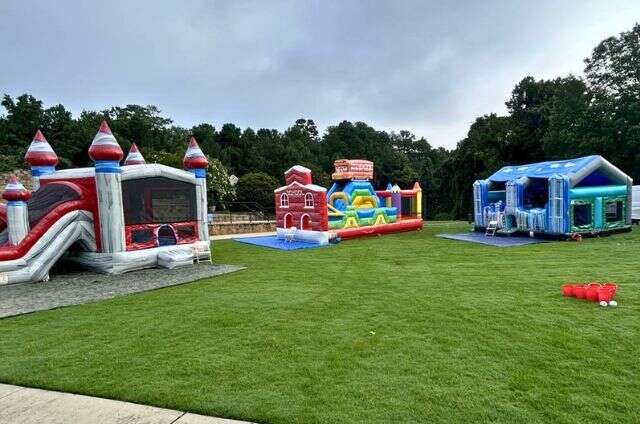
Space requirements depend on course length, but every inflatable needs clearance beyond its physical footprint. You're not just fitting the unit—you're creating safe entry zones, exit paths, and anchoring space.
Typical Space Requirements by Course Size
Compact Course (20–30 ft)
Minimum setup area: 20×25 feet
Ideal for: Backyard birthday parties, small school play areas
Fits most residential yards. Requires 3–5 feet of clearance on all sides for anchoring and participant flow.
Mid-Size Course (35–50 ft)
Minimum setup area: 30×50 feet
Ideal for: Park pavilions, school gymnasiums, church parking lots
Works well for medium-sized events with 50–100 participants. Needs overhead clearance of 12–15 feet if indoors.
Competition Course (50–70+ ft)
Minimum setup area: 40×70 feet
Ideal for: Large festivals, high school field days, corporate events
Requires open field or large parking lot. Dual lanes and extended length demand extra safety zones and supervised queuing areas.
What About Indoor Setups?
Indoor obstacle courses work, but only if your venue meets height and space requirements. Most courses need 12–15 feet of vertical clearance to accommodate climbing obstacles and inflated arches. Gymnasiums, recreation centers, and large fellowship halls typically work. Smaller multipurpose rooms do not.
Before booking an indoor setup:
- Measure ceiling height at the tallest point—don't estimate
- Confirm the venue allows inflatables (some insurance policies prohibit them)
- Verify accessible electrical outlets within 100 feet of the setup zone
- Check whether the blower noise level is acceptable during your event
Safety Guidelines for Obstacle Course Rentals at School Events
Professional inflatable companies follow ASTM F2374 safety standards for amusement devices, which cover anchoring, inflation maintenance, and operational protocols. But the rental company's setup is only half the equation—supervision and participant rules determine whether your event runs safely.
What Professional Setup Includes
Reputable rental providers arrive with trained staff who:
- Anchor the unit securely using ground stakes (grass) or sandbags (concrete/asphalt)
- Inspect all seams, netting, and entry/exit points for wear or damage
- Test blower operation and confirm consistent inflation throughout the course
- Place safety mats at slide exits and high-traffic zones where participants land
- Provide operational guidelines for adult monitors and participant rules
Always verify that your rental company carries general liability insurance and can provide proof of coverage. Schools and parks often require this documentation before approving the rental.
What Your Team Needs to Monitor
Even with professional setup, adult supervision at entry and exit points prevents 90% of incidents. Assign monitors who actively enforce:
✓ Safety Rules That Work
- One-way traffic flow—no reversing mid-course
- Remove shoes, glasses, jewelry, and sharp objects before entry
- Wait for the previous participant to clear each obstacle before advancing
- No pushing, tackling, or roughhousing inside the course
- Exit immediately if you feel dizzy, overheated, or uncomfortable
✗ Common Mistakes to Avoid
- Letting participants run the course without clearing the previous group
- Allowing significantly different-sized kids to race simultaneously
- Ignoring weight limits (typically 500–1000 lbs per course)
- Failing to monitor weather—strong winds require shutdown
- Assuming older kids "know better" and don't need supervision
⚠️ Weather Rule: If wind speeds exceed 20 mph or storms approach, the course must be deflated immediately. No exceptions. Inflatables become unstable in high winds, even with proper anchoring. Monitor weather forecasts before your event and have a backup indoor activity ready.
How to Choose the Right Obstacle Course for Your Event
Choosing the right course comes down to matching participant age, expected attendance, and event duration with a course that handles the volume without creating bottlenecks.
Decision Map: Which Course Fits Your Event?
Small Birthday Parties (10–20 kids)
Choose: Compact Course (20–30 ft)
Why: Short course keeps wait times under 5 minutes. Kids cycle through quickly without losing interest.
Bonus: Fits most residential backyards and requires minimal setup space.
School Field Days (50–150 students)
Choose: Mid-Size Course (35–50 ft) or Two Compact Units
Why: Longer course handles higher volume. Dual units split age groups and reduce congestion.
Bonus: Rotation stations keep kids active while waiting—pair with other activities. Learn more about coordinating multiple rentals in our Guide to Large Event Rentals.
Large Festivals (200+ attendees)
Choose: Competition Course (50–70 ft) with Dual Lanes
Why: Dual lanes allow head-to-head racing, doubling throughput. Competition format keeps lines moving and spectators engaged.
Bonus: Creates a focal point for your event—participants and spectators gather around the course. Consider pairing with carnival ride rentals for varied entertainment.
Timing Your Rental Duration
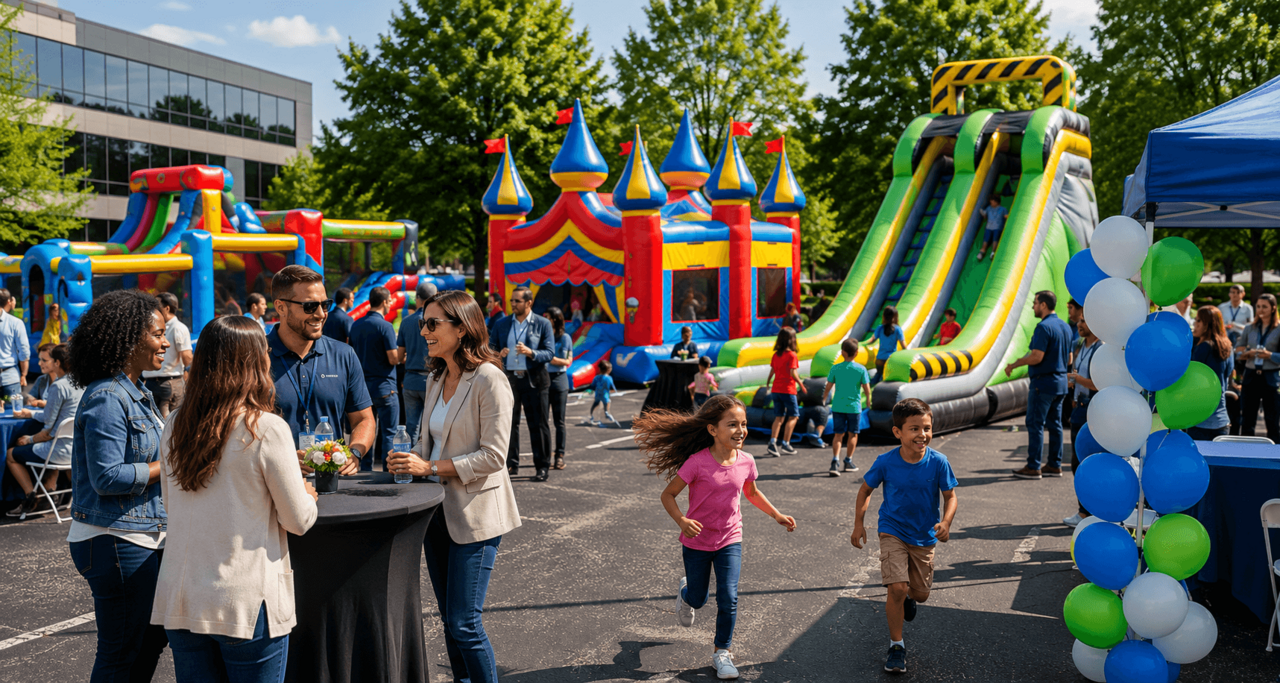
Most obstacle course rentals operate in 4-hour or full-day (8-hour) blocks. For birthday parties, 4 hours is typically sufficient—kids cycle through the course multiple times and move on to other activities. For school field days or large festivals, book the full day to avoid cutting activities short.
Setup and takedown add 60–90 minutes to your timeline. If your event starts at 1:00 PM, schedule delivery for 11:30 AM to allow for installation and testing. Similarly, keep the venue available for at least an hour after your event ends.
What Professional Event Planners Consider Before Booking
Experienced event coordinators evaluate obstacle course rentals through a practical lens: Will this keep participants engaged without creating logistical problems?
Here's what they prioritize:
Before the Event
- Measure your setup area and confirm overhead clearance
- Request proof of liability insurance from the rental company
- Verify electrical outlet locations and extension cord needs
- Check venue policies on inflatables and noise levels
- Confirm delivery time allows for full setup before guests arrive
During the Event
- Assign adult monitors to entry and exit points
- Enforce one-way traffic flow and wait-your-turn rules
- Monitor weather conditions and shut down if winds exceed 20 mph
- Keep a first aid kit accessible near the course
- Rotate participants if wait times exceed 10 minutes
After the Event
- Allow 60 minutes for professional takedown
- Inspect the setup area for any left-behind items
- Document any issues or incidents for future planning
- Gather feedback from participants and volunteers
- Note what worked well for your next event
For larger events combining multiple entertainment elements, our Ultimate Guide to Large Event Planning walks through coordinating timelines, vendor logistics, and crowd flow strategies.
Combining Obstacle Courses with Other Event Rentals
Obstacle courses work best as part of a larger activity rotation, especially for events lasting more than 2 hours. Kids burn through the course in 3–5 minutes, then need something else to do while waiting for their next turn.
Popular pairings that keep engagement high:
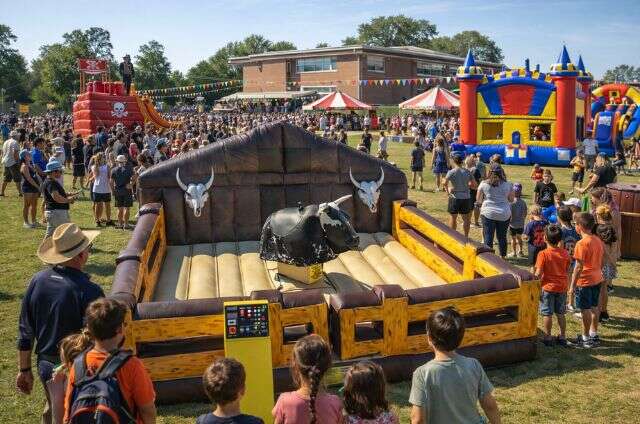
- Mechanical bull rentals for teens and adults—adds a competitive element with a different skill set. See our Mechanical Bull Rental Events Guide for safety protocols and space planning.
- Carnival games for younger kids—lower-intensity activities that balance high-energy obstacle racing
- Food stations or snow cone machines—gives kids a rest break between runs
- Seating areas with shade—parents and spectators need places to watch without standing in the sun
For fall community events, explore our guide on Top Rental Must-Haves for Fall Festivals to see how obstacle courses fit into larger seasonal programming.
Planning Ahead: When to Book Your Obstacle Course Rental
Peak season for obstacle course rentals runs April through October, with May and September seeing the highest demand for school events. If you're planning a spring or fall event, book at least 6–8 weeks in advance to secure your preferred date and course size.
For year-round planning strategies, our article on How Smart Planners Start Planning for Spring Events from Winter explains how early booking locks in availability and pricing before the rush.
💡 Pro Tip: Indoor venues book up quickly during winter months. If you're planning a cold-weather event, reserve your gymnasium or recreation center first, then confirm obstacle course availability. Some rental companies offer discounted off-season rates for November through March bookings.
Frequently Asked Questions About Obstacle Course Rentals
+What age groups can use inflatable obstacle courses?
Most inflatable obstacle courses accommodate ages 5 and up, with weight limits typically between 500–1000 lbs total. Elementary-age kids (5–10) thrive on shorter courses with simpler challenges, while tweens and teens (11+) prefer longer, more competitive race-style inflatables. Always verify age recommendations and supervision requirements with your rental provider, as configurations vary by design.
+How much space do you need for an obstacle course rental?
Space requirements vary by course length. Compact units need roughly 20×25 feet, mid-size courses require 30×50 feet, and full competition-style inflatables demand 40×70 feet or more. You'll also need 3–5 feet of clearance on all sides for anchoring and safe entry/exit zones. Measure your space before booking and confirm electrical outlet access within 100 feet.
+Are inflatable obstacle courses safe for school events?
Yes, when properly installed and supervised. Professional rental companies anchor units securely, inspect all seams and safety netting, and provide operational guidelines. Schools should assign adult monitors at entry and exit points, enforce one-way traffic flow, and remove shoes, glasses, and sharp objects before participation. Reputable providers carry liability insurance and meet ASTM safety standards for inflatable amusements.
+How long does it take to set up an obstacle course rental?
Setup typically takes 30–60 minutes depending on the course size and site conditions. Smaller units inflate in 20–30 minutes, while large competition courses may require 45–90 minutes for full setup, anchoring, and safety checks. Schedule delivery at least 90 minutes before your event start time to allow for setup, testing, and any unexpected delays.
+Can obstacle courses be used indoors?
Yes, but only if your venue meets height and space requirements. Most obstacle courses need 12–15 feet of vertical clearance and sufficient floor space for the unit plus safety zones. Gymnasiums and recreation centers work well. Confirm that your venue allows inflatables, has accessible power outlets, and permits the blower noise level during your event.
+What's the difference between obstacle course rentals and bounce houses?
Obstacle courses emphasize linear movement, timed challenges, and competition, while bounce houses focus on open jumping space. Obstacle courses feature climbing walls, tunnel crawls, pop-up barriers, and slide exits designed for racing. Bounce houses offer free-form play without structured objectives. For active kids and teens seeking competitive fun, obstacle courses deliver higher engagement and physical challenge.
What Makes Obstacle Courses Work for Your Event
Obstacle course rentals succeed when the course complexity matches participant age, the space accommodates safe setup, and adult supervision enforces consistent rules. Choose a course length that handles your expected attendance without creating bottlenecks, verify your venue meets clearance requirements, and assign monitors who actively manage traffic flow.
For school field days and large community events, pairing obstacle courses with other active rentals—mechanical bulls, carnival games, or interactive challenges—creates natural rotation stations that keep participants engaged throughout your event. For additional planning resources, explore our guides on church event rentals and corporate event entertainment options.
The best obstacle course rental is the one your participants can't wait to race through again. Match the challenge level to your group, plan for safe operation, and build in rotation time so everyone gets multiple turns without long waits.
Ready to Plan Your Event?
Whether you're organizing a school field day, birthday party, or community festival, the right obstacle course rental keeps participants active and engaged from start to finish.
Book Your Party Today!Questions about course sizes, space requirements, or availability? Call 678-752-8718 to discuss your event needs.