
Carnival Ride Rentals for Festivals, Schools, and Community Events
You're planning a festival, school fundraiser, or community gathering, and you know rides make the difference between a nice event and one people talk about for months. But if you've never rented carnival rides before, figuring out what's actually possible—and what fits your space, budget, and audience—can feel overwhelming.
This guide explains how carnival ride rentals work for real events. You'll understand which rides fit different venues, what safety and logistics actually look like, how pricing works, and what questions to ask before you commit.
Whether you're running your first school carnival or planning a multi-day festival, you'll finish this article knowing exactly what to expect.
What You'll Learn
- What Types of Carnival Rides You Can Actually Rent
- How Much Space and Power Carnival Rides Need
- Safety Standards and Operator Requirements for Ride Rentals
- What Affects Carnival Ride Rental Pricing
- How Far Ahead to Book Festival and School Carnival Rides
- How to Choose the Right Rides for Your Event Type
- Common Questions About Carnival Ride Rentals
Which Type of Event Planner Are You?
🎪 First-Time School Carnival Organizer
You're running your first fundraiser carnival and need rides that work in a school parking lot. You're focused on safety, simplicity, and attractions kids actually want.
Focus on: Space requirements, age-appropriate rides, operator supervision
🎡 Festival Committee Member
You're part of a team planning a community festival or fair. You need multiple midway rides that can handle crowds, fit your footprint, and create that classic festival atmosphere.
Focus on: Ride variety, throughput capacity, multi-day rentals
⛪ Church or Community Event Coordinator
You're planning a church picnic, homeowner association event, or neighborhood gathering. You want 1-2 signature rides that add excitement without requiring massive space or budgets.
Focus on: Single-ride options, smaller footprints, family-friendly attractions
What Types of Carnival Rides Can You Rent for Festivals and Events?
Carnival rides fall into categories based on size, thrill level, and age suitability. Understanding these categories helps you match rides to your venue and audience.
Traditional Midway Rides for Larger Festivals
These are the classic fair attractions people expect at community festivals and multi-day events. Ferris wheels create visual landmarks and accommodate all ages. Carousel rides appeal to younger children and nostalgic adults. Swing rides offer moderate thrills without extreme speeds.
Scrambler and Tilt-A-Whirl rides provide spinning motion that's exciting but manageable. These rides typically require 30x30 to 50x50 feet of space and need either generator power or dedicated electrical hookups.
Most traditional midway rides accommodate 12-24 riders per cycle and complete rides in 3-5 minutes. This throughput matters when you're expecting several hundred attendees.
Kiddie Rides for School Carnivals and Family Events
Smaller carnival rides designed for elementary-age children work perfectly in school parking lots and church grounds. Mini train rides circle a compact track. Tiny Tubs (small spinning teacups) and kiddie swings provide gentle motion.
These rides typically need 20x20 to 30x30 feet and can often run on standard 110V power. Setup and breakdown happen faster than full-size midway rides, which matters for single-day events.
Capacity runs 6-12 children per cycle. While throughput is lower than adult rides, kiddie attractions keep lines moving because ride durations are shorter (90 seconds to 2 minutes).
💡 Pro Tip: For school carnivals with limited budgets, one medium-sized ride (like a swing ride or scrambler) often draws more excitement than three kiddie rides. Kids ages 7-12 want something that feels like a "real" carnival experience.
Thrill Rides for Teen and Adult Audiences
Larger festivals sometimes include higher-thrill options like rock-o-plane rides, spinning rides with cage cars, or pendulum-style attractions. These rides appeal to teenagers and adults looking for adrenaline.
Space requirements increase significantly—expect 40x60 feet or larger footprints plus safety clearance zones. Power demands also go up, often requiring dedicated electrical service or industrial generators.
These rides work best for multi-day festivals with substantial budgets. A single thrill ride can cost as much as 3-4 standard midway rides, and setup requires more time and equipment.
Mechanical Bulls and Interactive Attractions
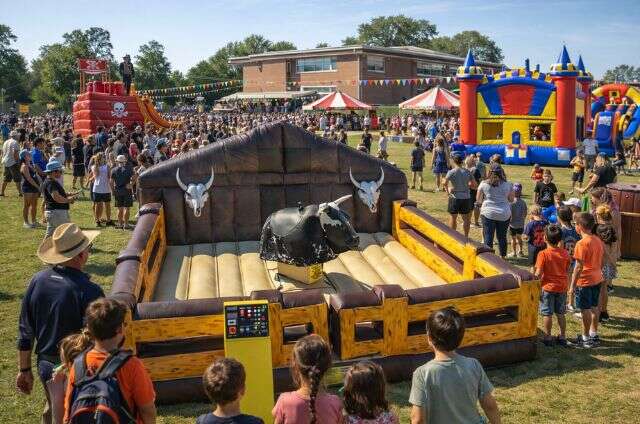
Not all carnival attractions are traditional rotating rides. Mechanical bull rentals create spectacle and participation in compact spaces. These work especially well at festivals where space limits full-size rides but you still want memorable entertainment.
Interactive attractions like rock climbing walls, bungee trampolines, or obstacle courses also fall into this category. They typically need 20x30 to 30x40 feet, require operator supervision, and handle 1-4 participants at a time.
These attractions generate crowd engagement differently than passive rides—spectators gather to watch, creating energy even when lines are short. Learn more about how mechanical bulls work for event entertainment.
How Much Space and Power Do Carnival Rides Actually Need?
Venue constraints determine which rides you can rent more than budget or preference. Understanding space and power requirements prevents disappointment and last-minute changes.
Space Requirements Beyond the Ride Footprint
Every carnival ride has a physical footprint—the ground space the equipment itself occupies. But you also need safety clearance zones around the perimeter. These buffer areas protect spectators and meet insurance requirements.
A Tilt-A-Whirl might have a 30-foot diameter, but you need 10-15 feet of clearance on all sides. So the total space requirement becomes 50-60 feet in each direction. This matters in parking lots where you're working around light poles, curbs, and access lanes.
Queue lines also need space. For school carnivals with modest attendance, you might manage with 10-15 feet. Larger festivals need 20-30 feet of queuing space per ride to prevent crowding and maintain flow.
Small School Carnival
2-3 kiddie/midsize rides
Total space needed: 5,000-7,000 sq ft (about half a standard parking lot)
Mid-Size Festival
4-6 traditional midway rides
Total space needed: 12,000-18,000 sq ft (a large field or full parking lot)
Large Community Fair
8-12 rides including thrill options
Total space needed: 25,000-40,000 sq ft (dedicated festival grounds or multiple adjacent lots)
Electrical Power and Generator Requirements
Smaller kiddie rides often run on standard 110V outlets—the same power as household circuits. You can plug them into existing outdoor outlets if your venue has accessible electrical service.
Mid-size and larger rides need 220V or 3-phase power. Schools and churches rarely have this available outdoors, which means you'll rent generators. Industrial generators that power carnival rides are loud, require fuel delivery, and add to your rental costs.
Generator placement matters. They must sit close enough to rides for power cables (usually within 50-75 feet) but far enough away that noise doesn't overwhelm conversation areas. Fuel tanks need clearance from foot traffic and food service areas.
⚠️ Caution: Confirm electrical needs in writing before signing rental contracts. A venue that "has power" might only offer household outlets. If your rides need generators, clarify whether the rental company provides them or if you're arranging separately—and who handles fuel.
Ground Surface Considerations for Ride Setup
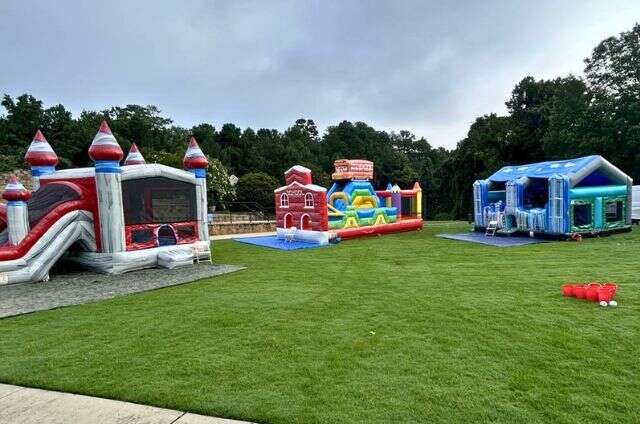
Carnival rides need firm, level surfaces. Asphalt parking lots work perfectly. Grass fields work if the ground is dry, compacted, and level. Soft or waterlogged ground prevents safe setup—equipment can sink or tilt.
Heavy rides need stabilization. Rental companies use outriggers, ground stakes, or concrete ballast blocks. On asphalt, this means drilling anchor points or positioning weight blocks. On grass, deep stakes secure the structure.
Underground utilities complicate setup. If your venue has irrigation lines, underground electrical, or septic systems, provide accurate maps. Hitting a sprinkler line or utility cable during staking can shut down your entire event.
What Safety Standards Apply to Carnival Ride Rentals?
Safety concerns keep many first-time planners from renting carnival rides. Understanding the actual regulations, inspection requirements, and operator standards removes the mystery and helps you evaluate rental companies properly.
State Inspection and Certification Requirements
Georgia requires annual inspections for all amusement rides. Licensed inspectors examine structural integrity, mechanical systems, electrical components, and safety restraints. Rides must pass inspection before operating at any event.
Reputable carnival ride rental companies maintain current inspection certificates for every piece of equipment. These certificates should include inspection dates, the inspector's credentials, and any noted maintenance or repairs.
When evaluating rental companies, ask to see inspection documentation. Legitimate operators provide this without hesitation. Companies that dodge or delay these requests lack proper certification.
Insurance Coverage and Liability Protection
Professional carnival ride rentals include general liability insurance covering equipment operation. Standard policies carry $1-2 million in coverage. This protects both the rental company and your event if accidents occur.
Your venue might require a certificate of insurance naming them as additional insured. This is standard practice. Rental companies familiar with festivals and schools handle these requests routinely—they'll send certificates directly to your venue contact.
Your organization's event insurance might include carnival ride coverage, or you might purchase a supplemental policy. Clarify coverage requirements early—insurance issues discovered a week before your event create panic.
🚩 Red Flags When Evaluating Carnival Ride Companies
🚩 Can't provide inspection certificates or says "inspections aren't required for private events"
🚩 No insurance documentation or refuses to name your venue as additional insured
🚩 Operators aren't trained employees of the rental company (subcontractors or day laborers)
🚩 Prices significantly below market for comparable rides—proper maintenance costs money
🚩 No written contracts or vague "handshake deals"
🚩 Equipment looks worn, rusted, or poorly maintained during pre-event site visits
Trained Operators and On-Site Supervision
Every carnival ride rental includes certified operators who remain on-site throughout your event. These aren't volunteers or your event staff—they're trained employees of the rental company.
Operators handle all ride controls, enforce height and safety restrictions, secure restraints, and monitor equipment during operation. They also perform visual safety checks between cycles and respond to mechanical issues immediately.
This supervision is non-negotiable. Rides cannot operate without trained attendants present. Your rental contract should explicitly state that operators are included for the full event duration, including setup and breakdown.
Weather Protocols and Emergency Procedures
Wind, rain, and lightning affect carnival ride safety. Professional operators follow strict weather shutdown protocols. Most rides stop operating when sustained winds exceed 25-30 mph or when lightning occurs within 10 miles.
These shutdowns aren't optional—they're mandated by manufacturer specifications and insurance requirements. Operators monitor weather throughout your event and halt rides when conditions become unsafe, even if skies look clear.
Understanding this prevents disappointment. Weather delays are part of outdoor carnival operations. The decision to stop rides isn't personal judgment—it's following safety standards that protect everyone.
What Actually Affects Carnival Ride Rental Pricing?
Carnival ride pricing confuses many first-time planners because costs vary dramatically based on factors that aren't always obvious. Understanding what drives pricing helps you budget accurately and negotiate effectively.
↑ What Pushes Carnival Ride Costs Higher
- Ride size and complexity — larger rides cost more to transport and require more staff
- Event duration — multi-day festivals cost significantly more than 4-hour carnivals
- Travel distance — rentals beyond 50 miles often include delivery surcharges
- Peak season timing — spring and fall weekends command premium rates
- Generator rentals — adding $300-800 per day if venue lacks power
- Insurance requirements — complex venue policies increase administrative costs
↓ What Helps Control Carnival Ride Costs
- Booking far in advance — 4-6 months out often means better rates and availability
- Single-day events — 4-6 hour rentals cost less than overnight or multi-day
- Off-peak dates — winter and mid-week events have lower demand
- Existing power sources — venues with outdoor 220V eliminate generator needs
- Package deals — bundling multiple rides from one vendor usually reduces per-ride cost
- Flexible ride selection — letting the company suggest available equipment for your date
Typical Price Ranges for Different Carnival Ride Categories
Carnival ride pricing varies by region, season, and specific equipment, but understanding general ranges helps you budget. These figures reflect typical 4-6 hour rental periods in the Southeast.
Kiddie rides (train rides, mini swings, small spinning cups): $500-1,200 per ride. These work for elementary school carnivals and smaller gatherings.
Mid-size midway rides (scramblers, swing rides, carousel): $1,500-3,500 per ride. These form the core of most community festivals and larger school events.
Large traditional rides (Ferris wheels, Tilt-A-Whirls): $2,500-5,000 per ride. These become focal points at established festivals.
Thrill rides (rock-o-plane, larger spinning attractions): $4,000-8,000+ per ride. Reserved for multi-day festivals with substantial budgets.
Multi-day festivals often negotiate daily rates rather than per-event pricing. A ride that costs $3,000 for a single day might rent for $6,000-7,000 for a three-day weekend, rather than $9,000.
Package Pricing vs Individual Ride Rentals
Rental companies often create carnival packages bundling multiple rides at discounted rates. A three-ride package might cost $5,000 compared to $6,500 if you rent each ride separately.
Packages also simplify logistics. One delivery truck, one setup crew, one insurance certificate, one point of contact. For festivals juggling multiple vendors, this consolidation reduces coordination headaches.
The trade-off? Less flexibility in choosing specific rides. Packages work best when you trust the vendor to select appropriate attractions for your audience and space, rather than insisting on particular equipment.
💡 Budget Planning Tip: For school carnivals, allocate $2,000-4,000 total for 2-3 rides. For community festivals expecting 500+ attendees, budget $8,000-15,000 for a proper midway experience with 4-6 rides. Always add 15-20% contingency for generators, delivery, or last-minute changes.
How Far in Advance Should You Book Carnival Rides?
Timing carnival ride bookings correctly affects both availability and pricing. Too early wastes decision-making bandwidth. Too late leaves you with limited options or no rides at all.
Peak Season Booking Windows (Spring and Fall)
Spring (March-May) and fall (September-November) are peak carnival seasons. Weather cooperates, schools schedule fundraisers, and festivals happen every weekend. This demand tightens ride availability dramatically.
For spring events, start booking in November or December—4-6 months ahead. Fall festivals should lock rides in by June or July. Popular equipment gets reserved quickly, especially for Saturday dates.
Waiting until 6-8 weeks before a peak season event limits your choices. You might secure rides, but probably not your first-choice attractions or package configurations. Pricing may also increase as availability tightens.
Off-Peak and Summer Event Booking
Summer events (June-August) see moderate demand—weddings and corporate gatherings dominate, but fewer community festivals. Booking 6-10 weeks ahead usually works, though popular July 4th weekends need earlier reservations.
Winter (December-February) is truly off-peak for outdoor carnival rides. If you're planning an indoor facility event or mild-weather gathering, you might book just 4-6 weeks out and still have good selection.
Last-minute bookings occasionally happen when cancellations free equipment. But planning major events around potential last-minute availability creates unnecessary stress and often fails.
Large Festival Planning Timeline
Multi-day festivals with 6-12 rides should begin the booking process 6-9 months ahead. These events need coordination across vendors, venue permits, insurance, and marketing—carnival rides are one critical piece of a complex puzzle.
Large ride orders sometimes involve deposits and phased planning. You might secure headline rides (Ferris wheel, signature attraction) first, then add supporting rides as the budget firms up and attendance projections clarify.
This extended timeline also allows for proper venue planning, generator arrangements, traffic flow design, and insurance compliance. Rushing large festival logistics invites problems. If you're building a comprehensive event plan, explore resources on planning large-scale event rentals.
Booking Timeline Quick Reference
- 6-9 months ahead: Large festivals, multi-day events, peak season dates
- 3-5 months ahead: School carnivals, church festivals, spring/fall single-day events
- 6-10 weeks ahead: Summer events, smaller gatherings, flexible ride selection
- 4-6 weeks ahead: Winter events, off-peak dates, backup options acceptable
How to Choose the Right Carnival Rides for Your Event Type
Choosing carnival rides isn't about picking your personal favorites or copying another festival. The right rides match your audience demographics, venue constraints, and event goals.
Matching Rides to Audience Age and Demographics
Elementary school carnivals (ages 5-11) need rides with broad appeal and minimal height restrictions. Carousel rides, train rides, and moderate spinning attractions work best. Avoid thrill rides—they create lines of disappointed kids turned away at height requirements.
Middle school events (ages 12-14) want more excitement. Scramblers, swing rides, and rock-o-plane attractions satisfy this group. Kiddie rides feel insulting. One signature thrill ride makes a bigger impact than multiple tame options.
Community festivals with mixed ages need variety. One kiddie ride for young children, 2-3 family-friendly midway rides, and optionally one thrill attraction for teens/adults creates balance. This spread prevents any demographic from feeling excluded.
Church and senior-focused events favor gentle attractions—carousels, Ferris wheels, train rides. Thrill rides see little use at gatherings where most attendees are families with toddlers or older adults seeking calm entertainment.
Single Ride vs Multiple Ride Strategy
Events under 200 attendees often work better with one signature ride rather than spreading budget across multiple small attractions. A great Ferris wheel creates more excitement and better photos than three mediocre kiddie rides.
This approach also simplifies operations. One ride means one operator, one power source, one setup footprint. For first-time planners managing many moving pieces, simplicity has real value.
Multiple rides make sense when crowds exceed 300-400 people or events last longer than 4 hours. With only one ride, wait times become frustrating. Three rides distribute crowds and keep maximum wait times under 15-20 minutes.
Throughput and Capacity Considerations
Ride throughput—how many people experience the attraction per hour—matters more than you might expect. A carousel that seats 24 and completes cycles in 3 minutes handles roughly 480 riders per hour (at capacity).
Compare that to a mechanical bull (one rider, 90-second sessions) handling maybe 30-40 riders per hour. Both have value, but they serve different purposes. High-throughput rides move crowds. Low-throughput attractions create spectacle and photo opportunities.
For festivals expecting 500+ attendees, prioritize at least 2-3 high-capacity rides. Otherwise, wait times exceed 45 minutes and frustration replaces fun. Smaller events can mix high and low throughput options without creating bottlenecks.
🎪 School Carnival (150-300 attendees)
Recommended Setup:
- 1 family-friendly midway ride (carousel or swing ride)
- 1 kiddie ride for younger siblings
- Budget: $2,000-3,500
🎡 Community Festival (500-1000 attendees)
Recommended Setup:
- 1 signature ride (Ferris wheel)
- 2-3 midway rides (variety of speeds/styles)
- 1 kiddie ride
- Budget: $8,000-14,000
⛪ Church Picnic (100-200 attendees)
Recommended Setup:
- 1 gentle family ride (train or carousel)
- Optional: mechanical bull for added entertainment
- Budget: $1,200-2,500
Working With Rental Companies to Optimize Selection
Experienced carnival ride companies understand how different attractions work for various event types. Rather than insisting on specific rides, describe your event—audience age, expected attendance, venue space, budget—and ask for recommendations.
Good vendors suggest rides that fit your situation, not just what they have available that weekend. They'll flag potential problems: "Your parking lot can't accommodate a Ferris wheel, but a carousel and scrambler would work perfectly."
This collaborative approach produces better results than DIY guesswork. The company has seen hundreds of events—trust their experience while maintaining clear communication about your priorities and constraints. For broader event planning strategies, review insights on coordinating large event planning services.
Common Questions About Carnival Ride Rentals
What types of carnival rides can you rent for a festival?
You can rent a variety of carnival rides including traditional midway attractions like Ferris wheels, carousel rides, swing rides, and Tilt-A-Whirls. Smaller events often feature rides like mini scrambler rides, kiddie swings, and train rides. Larger festivals might include thrill rides like rock-o-plane or spinning rides. Your ride selection depends on the venue space, audience age range, and event duration.
How much space do carnival rides need at a school event?
Most carnival rides for school events require between 20x20 feet and 40x40 feet per attraction, plus clearance for safety zones. A typical school carnival with 3-4 rides needs approximately 5,000-8,000 square feet total. You'll also need to account for queuing space, operator areas, and access paths. Parking lots or large fields work well, while smaller playgrounds may limit your ride options.
Are carnival ride rentals safe for community events?
Yes, carnival ride rentals are safe when provided by licensed operators who follow state inspection requirements and maintain proper insurance. Reputable rental companies perform daily safety checks, provide trained attendants, and comply with manufacturer guidelines. Georgia requires annual inspections for amusement rides. Always verify the company carries liability insurance and can provide current inspection certificates.
How far in advance should you book carnival rides for a festival?
Book carnival rides 3-6 months ahead for spring and fall festivals, which are peak seasons. Summer events can sometimes be booked 6-8 weeks out, though popular weekends fill quickly. Large community festivals with multiple rides should reserve 6-9 months early. Last-minute bookings (2-4 weeks) are occasionally possible for smaller ride packages during off-peak months.
What's included in a carnival ride rental package?
A complete carnival ride rental includes the ride itself, transportation and setup, trained operators for the event duration, liability insurance coverage, and takedown after your event. Some packages include ticketing systems or wristbands. Power requirements vary—some rides run on generators (provided or rented separately), while others need dedicated electrical service. Confirm what's included in your specific quote.
Can you rent just one carnival ride or do you need multiple?
You can absolutely rent a single carnival ride for smaller events like school carnivals, church gatherings, or neighborhood parties. One signature ride often works better than multiple smaller options for events under 200 attendees. Larger festivals benefit from 3-5 varied rides to accommodate different age groups and keep wait times manageable. Single-ride rentals typically cost less and require smaller footprints.
Understanding Carnival Rides Changes How You Plan Events
Now you understand what carnival ride rentals actually involve—the space requirements, safety standards, pricing factors, and selection strategies that make the difference between chaotic stress and successful events.
You know that booking timelines matter more than you initially thought, that venue constraints often determine which rides work before budget enters the conversation, and that one well-chosen ride frequently outperforms three mediocre options.
Whether you're planning your first school carnival or a multi-day community festival, these fundamentals apply. The specific rides might change, but the principles—match attractions to audience, prioritize safety and logistics, book early during peak seasons—remain constant.
For more insights on creating memorable events, explore guides on corporate event rentals or planning strategies for fall festival must-haves.
Ready to Make Your Event Unforgettable?
Whether you're planning a school carnival, community festival, or church gathering, we'll help you choose rides that fit your space, audience, and budget perfectly.
Book Your Party Today!No pressure, no pitch — just helpful guidance for your event